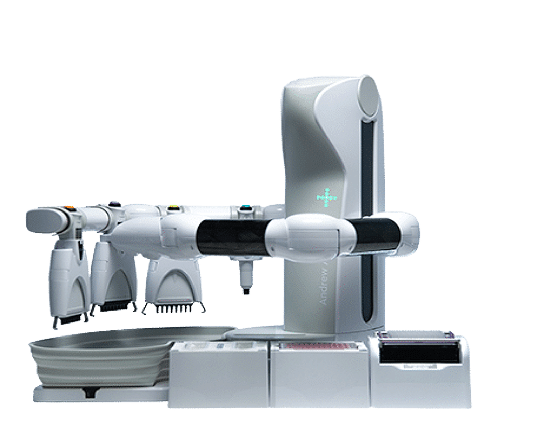
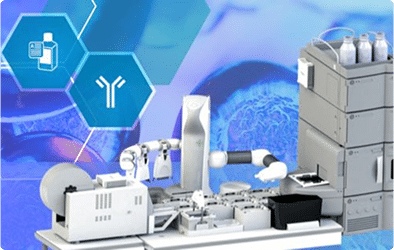
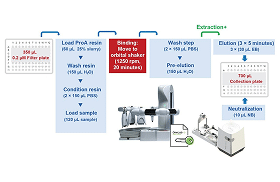
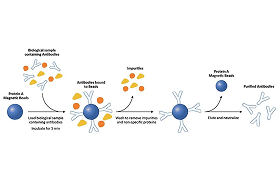
Accelerate your methods with Waters automated sample preparation solutions. Whether you are working on monoclonal antibodies, ADCs, or enzyme replacement therapies, the Andrew+ Robot can address your sample preparation challenges. Simple setup, intuitive protocol design, for multiple workflows, and data integrity compliance enable you to focus on your results.
Protein therapies, such as monoclonal antibodies, antibody-drug conjugates (ADCs), and enzyme replacement therapies, address clinical conditions such as cancer, inflammatory disorders, and rare diseases. Ensuring the safety and efficacy of these therapies requires comprehensive characterization using ligand binding assays and LC-MS workflows, such as peptide mapping and glycan profiling.
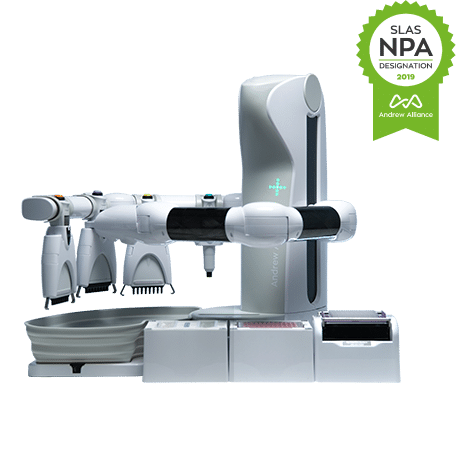
The Andrew+ Robot, powered by OneLab Software, streamlines the sample preparation process for protein therapies with remarkable efficiency. Its features, including:
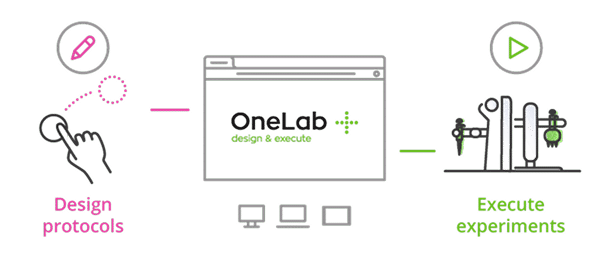
Intuitive protocol design
Straightforward setup
Step-by-step guidance,
Click & Execute Methods
Robust data integrity compliance
Not only enhance laboratory productivity but also ensure accurate, reliable results that uphold product quality and safeguard patient well-being. Trust Waters as your single source for sample preparation solutions to advance your studies on protein therapies.
Easy, automated sample prep for protein therapy characterization assays on the Andrew+ Robot enhances lab efficiency and data integrity compliance while delivering accurate, reliable results
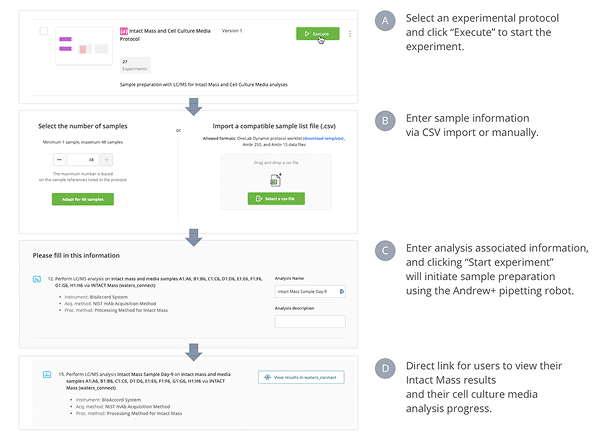
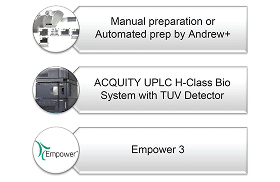
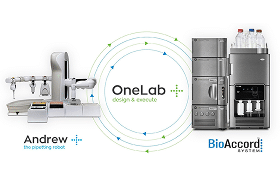
OneLab Software protocols enable upstream engineers to routinely collect product quality attributes and metabolite information for monitoring and as part of the Waters Bioprocess Walk-Up Solutions. With the OneLab Software waters_connect integration, Waters provides a streamlined and user-friendly process for performing precise and accurate sample preparation using the Andrew+ Robot directly followed by high-quality LC-MS data acquired using the BioAccord™ System.
Effortlessly design and execute endotoxin testing protocols from your PC or tablet using OneLab Software
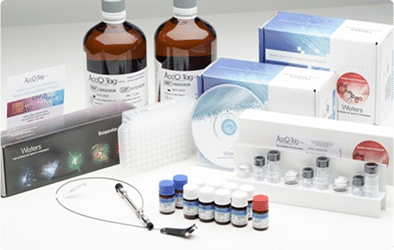
No need to be a software engineer to write sophisticated protocols for automating sample prep in protein therapy analysis—OneLab Software makes it simple. With its intuitive drag-and-drop interface, creating automated protein therapy characterization assays has never been easier. Plus, help is always available through the embedded chat feature. OneLab Software’s tools simplify calculating dilution factors and designing serial dilutions without error. For common applications like peptide mapping and glycan profiling, you’ll find the protocols you need in the OneLab Software online protocol library. Download Click & Execute Methods for AccQ•Tag™ Amino Acid Sample Prep, PeptideWorks, and GlycoWorks, follow the step-by-step instructions to set up your workflow, and experience automation with ease. Rest assured, OneLab Software supports all your data integrity compliance needs, making protein therapy characterization seamless.
Solutions
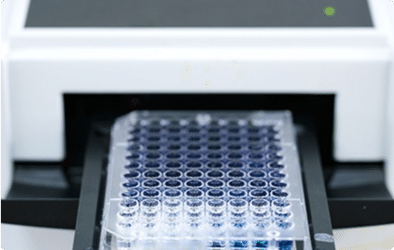
Easy, automated endotoxin testing on the Andrew+ Robot
With its simple setup, step-by-step guidance, Click & Execute Methods supporting multiple endotoxin testing platforms, and data integrity compliance, Andrew+ Robot will enhance your lab’s efficiency while delivering accurate, reliable results to ensure product quality and patient safety.
Intuitive protocol development for protein therapy sample prep with OneLab Software
Creating automated sample prep protocols for protein therapy analysis has never been easier thanks to OneLab Software’s intuitive drag-and-drop interface. You can access help through the embedded chat, download protocols from the online library, and rely on robust data integrity compliance—just a few of the ways OneLab Software simplifies automated protein therapy sample prep.
Automated endotoxin testing with the Andrew+ Robot boosts lab efficiency, enhances data integrity compliance, and delivers accurate, reliable results to ensure uncompromised product quality and patient safety.
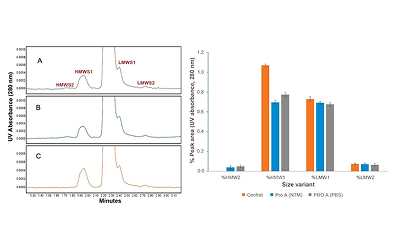
Shown is an evaluation of the SEC-UV quantitative results for protein A purified mAb spiked into A; PBS (n=8, gray) and B; non-transfected CHO cell conditioned media (NTM, n=8, blue) are compared to C; a spike control (n=3, orange). Chromatographic conditions are provided in the text. Error bars represent the uncertainty (95% CI) of values obtained. These data were collected on an ACQUITY™ Premier BSM UPLC.
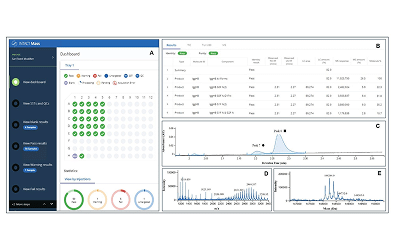
Display of Intact Mass App in the waters_connect platform. (A) Dashboard view showing injections and status of mAb detection, green color indicates the sample has passed detection criteria set in the method. (B) Summary table of modifications observed for the mAb produced including r.t., MS response, %modifications and other info. (C) Observed TUV chromatogram, which is used for peak detection. The first peak shown is light chain (LC) of the mAb, second peak is intact mAb. (D) Observed spectrum of the intact mAb peak, showing charge state distribution. (E) Deconvoluted spectrum of intact mAb, exhibiting the expected four major glycan modifications.
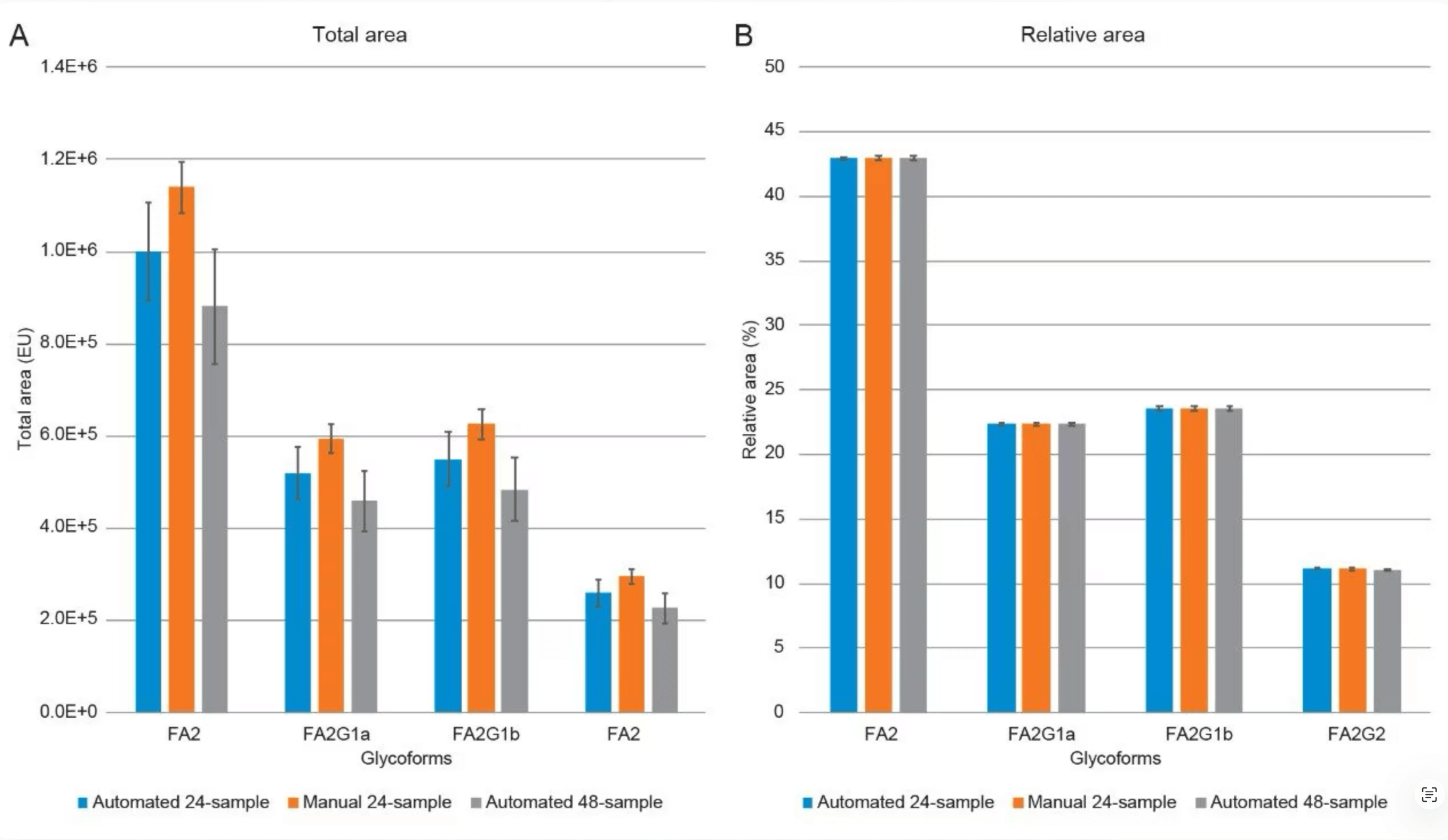
Manual and automated 24-sample preparations alongside automated 48-sample preparations of Intact mAb Mass Check Standard (p/n: 186006552) murine IgG1 protein. Data sets are cumulative of 2 preparations on different days for a total of N = 48 for the 24-sample preparations and N = 96 for the 48-sample preparations. A) Total area comparison of the 4 major glycoforms monitored from the chromatographic profile. B) Relative area comparison of the same 4 glycoforms.
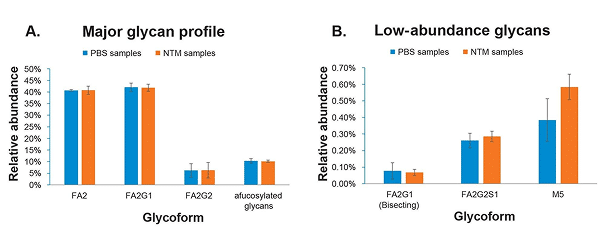
Comparison of UPLC-MS N-glycan profiles of trastuzumab-anns purified from PBS and NTM. Error bars show the 95% confidence interval (n=4). The method enables comparison of N-glycan profiles between multiple sample types for high- and low-abundance glycans.
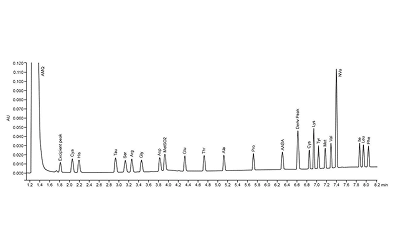
Separation of 10 pmols of the cell culture standard spiked with 23.5 pmols of Nva on column following automated sample prepared on the Andrew+ Robot for Amino Acid Analysis.